
PVC doors
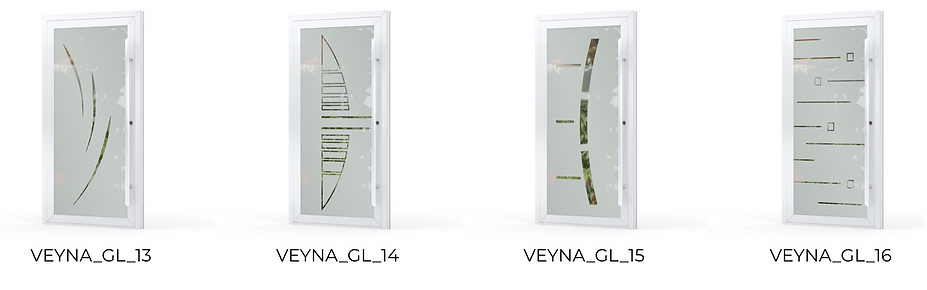
what truly distinguishes one pvc door from another is the type of infill it uses. you can select from a range of decorative panels offered in four contemporary collections or opt for traditional glazing units available in double or triple versions. each option makes it possible to customize the door to suit virtually any architectural concept and meet the expectations of even the most demanding designers
available glazing for pvc doors: standard, soundproof, anti-sun, hardened, laminated, ornament
pvc door panels examples
economics line


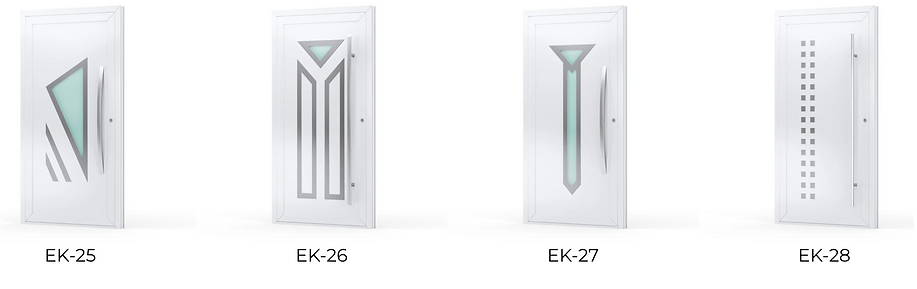


Basic Line


new line


Glass Line




Profiles


PVC doors – what to look for and who they’re best for
What really makes PVC doors different?
The key factor is the infill type. You can choose decorative panels (4 collections) or classic glazed options with double- or triple-glazing.
How to choose glazing for your needs?
Available options include: standard, soundproof, anti-sun, hardened, laminated, ornament — so you can tailor the door for noise reduction, safety, and privacy.
How to read profile parameters (simple)
-
Uw: the lower the value, the better the thermal insulation.
-
Gaskets: 2 or 3 — for higher comfort, customers often choose systems with 3 gaskets.
-
Water resistance / air permeability / wind load: important when the door is highly exposed to wind and rain (e.g., open locations).
Quick PVC recommendations (from your profile list)
Best insulation (PVC)
-
GEALAN S 900 doors – Uw 0.85
-
GEALAN Linear – Uw 0.90
Comfort (better sealing + glazing options)
-
Profiles with 3 gaskets + soundproof / laminated glazing (depending on the need). Examples of 3-gasket systems on the site: GEALAN S 900 and GEALAN Linear (plus other configurations in the list).
Best price-to-quality ratio (PVC)
If you want durable doors at a reasonable price, choose popular, practical systems with standard parameters (e.g., Uw 1.30): e.volution 70 AD, Kömmerling 76 AD, Veka 76 AD.